In 1934 the Bradford born writer and play write JB Priestley came to Stoke as he journeyed around researching a book that described Britain in the 1930s. He had seen the new industries that were opening up in the South of England and he was obviously aware of the huge textile mills of Yorkshire and Lancashire and now he was in the Potteries to document the area for posterity. He was not impressed by the physical geography of the area. The region was an unrelentingly grim one, an ugly work a day place. He could not find a City Centre only a collection of small towns full of mean houses in equally mean streets. What intrigued Priestley used to the gaunt vastness of the factories of the West Riding was the littleness of the factories and the major public buildings. It reminded him of Lilliput. The smoke belching out of the bottle kilns were in his opinion a monstrous intrusion on the landscape.
The Potteries were for him as a man himself from the provinces was that he found it insular, self-contained and within the newly created City Of Stoke on Trent there was little to raise the spirits.
However he was fascinated by the pottery industry as he saw as still essentially a craft industry with a contented workforce. It was still dominated by small family run companies. But one point that the Yorkshire man made was that a place like Stoke was “ no place to be idle in” “For a potter must either be in work or in misery”
Priestley ended his piece by hoping that “one day Stoke on Trent would emerge a real city, spacious and gay, high and white”
Priestley was not the only well-known writer in the area in the 1930s. It was something of a vogue for writers to travel into the depressed industrial areas to judge for themselves the misery and poverty. In 1936 George Orwell the public school educated scion of colonial public servants came through North Staffordshire on his way to Lancashire. He had been commissioned to write a piece of extended reportage on the social conditions in the north of England. The research would eventually produce “The Road to Wigan Pier”. Orwell being an observant writer picked up material that he hoped to use latter in the book as he progressed northwards. He passed through the area on foot in February 1936. It was bitterly cold as he came through Hanley and Burslem. He noted in his journal that the streets were full of poorly dressed and desolate looking people. The shops looked meagre and were scantily provisioned.
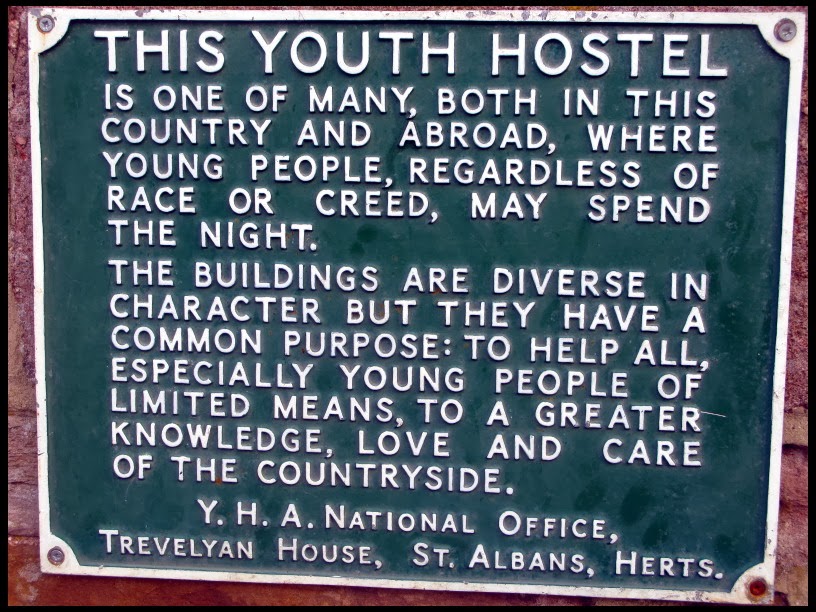
Orwell stayed a night at the Youth Hostel beside Rudyard Lake. The lake was frozen over and ice had formed into blocks which gave off a clanking sound as they collided into one another. Cigarette packets bobbed up and down amongst the ice floes and Orwell felt it was one of the most depressing images he had ever witnessed. The Youth Hostel was freezing and lit only by candles. It was so cold that he thawed his hands over a fire in the morning to get warm. He walked on towards Macclesfield arriving in Manchester penniless by the evening. He pawned his scarf and spent the night in a doss house before meeting people who put him in contact with people from Wigan.
Both men were drawn to Stoke as even then it was considered an area that had the history of being dominated by one industry and was finding it difficult in adapting to the new economic conditions of the time.
In October 1929, the collapse of the Stock Market in New York heralded the Great Depression. The ensuing American economic recession shook the world: World trade contracted prices fell and governments faced financial crisis as the supply of credit dried up. Many countries adopted an emergency response to the crisis by erecting trade barriers which worsened the crisis by further hindering global trade.
The effects on the industrial areas of Britain were immediate and devastating, as demand for British products collapsed. By the end of 1930, unemployment had more than doubled from 1 million to 2.5 million and exports had fallen in value by 50%. Government revenues contracted as national income fell while the cost of assisting the jobless rose. The industrial areas were hardest hit, along with the mining districts. London and the south-east of England were hurt least. The political centre of the country was therefore most remote from the impact of the recession..
In Stoke in the worst year of the recession 1932 30% of those employed in the pottery industry were unemployed. The situation did improve during the decade and by 1936 the proportion did fall by to 17%. The area remained depressed and unemployment remained an intractable problem. Lowering tariffs and imports from other parts of the world continued to put the Pottery industry under the greatest of pressure. The courage and stoicism of the Potters suffering from the Coalition Governments indifference was noted by the Daily News in August 1932
And never has the true kindness been manifested than today, sharply silhouetted as it is against the background of industrial gloom
Frankly the Potters admit that the land flowing with protectionist milk and honey is not theres. Long as it been promised them. Their fathers had waited in vain to posses it and found it a barren desert. Indeed under the Government some of the oasis that was already there’s has been despoiled by the enemy.
.
Under such circumstances it was understandable that people might look to the political extremes and the 30s offered a number of choices to those looking at the edges of politics.. Oswald Mosley believed himself the man for the moment. The Leader of the British Union of which were also known as the Blackshirts from their clothing believed his time had arrived.
Mosley knew North Staffordshire well. He spent some of his child hood at Rolleston Hall near Uttoxeter. A First World War hero much was expected of Mosley whose dashing good looks and political connections marked him out as potential Prime Ministerial material. He was a man in a hurry and despised the existing political structure having been a Conservative MP and then joining Labour where he became a Birmingham MP entering the cabinet of the Labour Government in 1929. He was desperate to do something about unemployment and published the Mosley memorandum in 1930, which advocated public works and increased borrowing to finance the programme. The Labour Party leadership rejected it and Mosley resigned the Labour Party in disgust. By the early 1930s he was looking across to Italy and the fascist state of Mussolini as inspiration to start a new political party- the British Union of Fascists to tackle many of the social problems that beset Britain.
Stoke on Trent was one of his power bases. He was assisted in this by his first wife Lady Cynthia Mosley MP for Stoke in the late 1920s and adored by many local people for charm. The City became the location for an early meeting of the British Union of Fascists. An well-advertised meeting was held in the King’s Hall in Stoke in October 1932. On the night of the meeting a packed hall listened intently as Mosley explained the objects of the BUF. In Government he laid before the country a set of ideas to meet an emergency but the established parties would not accept them. These ideas ‘had now been developed into a permanent programme, and a political system and philosophy of life which he believed could save the future of this country’. Mosley was always a mesmerising speaker
The party did well and recruited many members in the early part of the decade. The first BUF branch headquarters in Stoke-on-Trent was at 84 Normacot Road, Longton, opened in October 1933. A second office in Stoke at 14 Glebe Rd followed.
There was little opposition to the BUF in Stoke in this early period. There was a very small Communist Party in the City were vociferously opposed to Mosley but the main political parties choose to ignore the BUF.
There were about 500 individual members and additional 500 supporters. It was successful at recruiting school children who were organised into a youth wing.
On the 25th March 1934 the BUF held two very successful public meetings in the Potteries. Mosley spoke at an evening meeting at the Kings Hall and earlier the Director of Research for the BUF William Joyce, later to be known as the executed traitor Lord Haw Haw, spoke at a packed meeting at Longton Town Hall. He was given an unbroken hearing as he explained Fascism. Joyce could be a very witty speaker as a confrontation at a meeting around that time proves. He was heckled by a middle aged woman who shouted “ You bastard” as Joyce rose to speak. His answer “ Not now mother” suggests a quickness of mind. Mosley spoke later that day to a 4,000 strong audience.
According to the Sentinel journalist covering the event a larger venue would have been filled without difficulty. Local people flocked to hear the fascist leader. The hall was filled long before the meeting was due to start, there being a large queue waiting early in the evening. Mosley was given an enthusiastic reception. The meeting passed orderly and uninterrupted throughout.
Membership and interest in the movement in the area was broken following the violence at a large public meeting at Olympia in London in June 1934. Nearly 1000 Stoke BUF members and supporters arrived in the capital in 60 buses. Many of them found themselves caught up in the riot in and around the hall as a group of around 4,000 anti fascists laid siege to the venue. One Stoke participant at the rally Albert John Buckley, aged 17 of 64 New Street, Hanley, sustained serious internal injuries when struck across the stomach with a flagpole in the melee.
The local BUF membership suffered a further attack when reports began to circulate that the centres were hot beds of sexual activity.. A clean up was ordered and a senior member of the Blackshirts as the BUF was commonly known as arrived in Stoke to organise a purge of the local party. AK Chesterton- a relative of GK Chesterton the writer- was alarmed to find that the local centres had degenerated into a drinking club with separate bars labelled Officers and Blackshirts. He closed the clubs.
Mosley however continued to be a draw. On the Saturday evening of 10 November 1935 the fascist leader addressed yet another capacity 4,000 strong audience at the King’s Hall, Stoke. The local press reported that during his speech Mosley told the audience that Jews controlled the City of London which in turn dictated to whichever party was returned to Westminster and used it ruthlessly and relentlessly against Britain’s interest.
Meanwhile growing hostility to the BUF was evident in the streets of Stoke on Trent. A Remembrance Day wreath laying ceremony at the cenotaph in Kingsway was disrupted when local Blackshirts were subject to booing and jostling Incidentally my mother as a child recalls the disturbance as innocent passer-by were in danger of being caught up in the violence.. It was a similar experience when out door meetings held in Market Sq, Hanley. sometimes required the police to part local fascists and communists..
The last gasp of fascism occurred in April 1938 when a Kings Hall meeting, which Mosley spoke, was violently disrupted by local Communists. Local BUF activists had ascertained before the meeting that any trouble could be contained. The violence inside and outside the hall proved him wrong. Several thousand people turned up to demonstrate against the presence of the leader of the black shirts. The worst incidents of the night, however, occurred after the meeting. A large number of anti-fascists assembled outside and waited for Mosley to attempt to leave. When he emerged with a body of escorts, in a portion of the crowd broke through a police cordon and rushed the fascists and fighting continued for quite a while before the police succeeded in restoring order. But it was the up turn in the local economy that doomed the BUF in Stoke. At the time of Mosley’s final visit to Stoke-on-Trent as fascist leader in 1938 pottery exports from the start of the year had increased impressively and the need for a radical right solution to economic problems seemed unnecessary.
One boost for the local industry occurred with eagerly awaited Coronation of Edward VIII intended for the spring of 1937. Edward was very much a play boy prince succeeded his respected father George V in January 1936. However by December a constitutional crisis occurred when Edward let it be known that he intended to marry his girlfriend the American divorcee Wallis Simpson . The Government lead by the Conservative Prime Minister Stanley Baldwin and the Church of England made it clear that they could not allow the relationship to continue as it would jeopardise Edward’s position as Head of the Church of England. The Church could not recognise Mrs Simpson as Queen as a divorced woman. While the crisis developed one man who was willing to support Edward was Oswald Mosley who was living with his second wife Diana at Wotton Lodge in the Staffordshire Peak District. Mosley had married Diana Mitford at a secret ceremony in Germany in October 1936. Hitler was one of the guests. However his assistance was not required and Edward abdicated to be replaced by his brother who ascended the throne as George VI. Although the institution of the Monarchy shook it quickly resumed its popularity and it was the intentions of the American woman which questioned in that most insightful of arenas the school playground’s of Stoke. My mother recalled children’s song of the time
Who’s that coming down our street?
Its Mrs Simpson and her smelly feet.
She’s been married before
And now she’s knocking on Eddy’s door.
The change for the Coronation caused consternation in the Pottery industry as the Sentinel opined
Of course mugs and beakers, which are either in the biscuit or glost stage, will be capable of utilisation for King George VI designs but losses must be sustained in respect of the great quantity of lithographic sheets which have been printed already
Mr Gilbert of Drubbery Lane, Longton in the Letters page had a solution
I suggest that every family in the Potteries and elsewhere should endeavour to buy a Coronation Mug bearing the image of Edward VIII
In this way we can assist the manufactures, wholesalers and shopkeepers to clear their stocks and reduce the burden that has been placed on them.
But the new King and his family had the good will of the people of North Staffordshire and in an editorial in the Sentinel commenting on these tumultuous events remarked
In all we say let there be charity, in all we do let there be unity. Then the Empire will save its soul.
We have a constant vision. The happy family, the beloved little Princesses Elizabeth and Margaret Rose. We are confident of a happy future.
But already the vision was beginning to darken