Wednesday, 12 March 2014

What have the Celts done for us


My daughter is studying the Romans at school and I was faced with one aspect of the teaching of history that was new to me that was the pronunciation of the warrior queen of the Iceni who led the resistance against the Roman legions in the 1st century AD- Boudica. Is it said Bow-der- ceea or Bud-dica? It seems that the later is the correct way and the error was the result of some ancient scribe incorrectly translating a text. It is a truism that history is written by the victors and the Roman historians who write about the invasion of Celtic Britain portrayed the natives as barbarians. We get a picture of an uncivilised, motley collection of peoples, undisciplined, unkempt who lived in mud huts and engaged in human sacrifice. The chroniclers write about the Ancient Britons as having moustaches on which morsels of food hung and favoured trousers as opposed to the toga.

 I read a book over the New Year which showed an entirely different picture of the inhabitants of these islands prior to the Romans. Take one example that the country had no roads and the Romans built them. According to the Ancient Paths by Graham Robb the road system of the Celts in Britain was sophisticated and as evidence he cites the chariots of the Celts which the Romans later adapted. I recall a complete chariot dating from this time was excavated in Yorkshire recently. The Ancient Britons also had towns called oppidum which the Romans later took over. Chester, St Albans and Leicester are just a few examples. They had trading links throughout Europe. The Druids were guardians of an advanced education system which utilised astronomy. In short, they were not the uncouth; illiterate savages that Roman propagandists like Tacitus attempted to make out.

The Staffordshire Moorlands at the time of the Roman invasion lay in a border zone between tribes. To the west up to the Welsh border was the territory of the Cornovii. They had townships on what became Chester and Wroxeter. They liked to wear torcs or necklaces of twisted gold. They were expert in weaving and dyeing, and loved bright colours. Women wore their hair in two thick thigh-length plaits. They resisted the legions and Caratacus their leader made a last stand in the Shropshire Hills. To the north were the Brigantes who ruled Northern England.

 Their leader was Queen Cartimandua, who ruled the Brigantes for the next few years in comparative quiet before a rebellion was put down with the support of the Romans. In the east covering what is Derbyshire, Leicestershire and Lincolnshire were the Corianti a peaceful people who were receptive to Roman rule, perhaps because the presence of the Romans on their territory deterred the raids by their neighbours, the warlike Brigantes. The Romans built an auxiliary fort at Rocester on the Churnet. It was probably established during or shortly after AD69 when Cartimandua, escaped from the followers of her estranged husband Venutius, who been finally forced by political pressures to seize control of the Brigantian state. The queen had to be rescued by a legion sent to help by the Roman governor Suetonius Paulinus, and a garrison was set at Rocester on the borders of the - now hostile - Brigantian client state.

Wednesday, 5 March 2014

Notorious Strumpet, Dangerous Girl


I came across the story of  Sarah Wardle purely by chance where her exploits were  reported in the “Staffordshire Advertiser” in early 1818. I read of her escape from prison and wondered whether she had managed to evade the authorities. The answer to my question was revealed in an Australian book published in the 1970s “Notorious Strumpets and Dangerous Girls” on female convicts in Tasmania where her case is fully described.

She was born in Ipstones in the 1780s and fell foul of the law for attempting to pass fake money in Leek in the summer of 1817. Passing counterfeit money could have lethal consequences as a fellow Moorlander discovered when George Fearns of Bottomhouses went to the gallows in 1801 for dealing in forged notes. A forged bank note had been found on Sarah and at the Summer Assize at Stafford she was found guilty and sentenced to death although her sentence was later commuted to 14 years transportation to Van Dieman’s Land( modern day Tasmania). She was incarcerated in Stafford Jail while passage to Australia was arranged and she was due to sail in a prison ship in the spring of 1818. Sarah was described as being of medium height, brown hair and married with 3 children. She was 34.

One January morning a ladder was found propped up against a wall at the jail and Sarah had made her escape. The prison authority was dubious that a woman of middling years could have escaped and suspicion fell on a prisoner George Walker and a turnkey named Bould in assisting her. Reading the account one is struck by how much felons were involved in the running of the jail. Sarah had worked in the Infirmary with Walker where, it seems, a relationship was struck up. Prisoner’s families could come and go as they pleased and Sarah’s 13 year old daughter was a frequent visitor bringing with her food and money which was used to bribe jailers or alternatively Sarah may have used sexual favours to get out of the prison.


 Sarah’s escape was widely reported and the Bank of England in an unprecedented step increased the reward money to £60 from £10. Walker went to trial and freely admitted his responsibility in her escape- she had simply walked out of the front gate at the right time. Walker received Sarah’s punishment and he was transported for 14 years.

 But what of Sarah?

In March 1822 a Staffordshire woman was visiting Gloucester when she saw Sarah Wardle standing in the doorway of a pub. She denied it, but the visitor was right. Sarah had passed herself off as a servant whose mistress was visiting Ireland leaving her behind in England. She became friendly with an elderly couple who ran a pub in Gloucester. The old woman died and Sarah was intending to marry the widower when she was discovered. In the meantime Sarah slipped away and evaded capture.

She was finally arrested in East London living under the name of Ann Layshaw. This time there was no escape and she set sail on a convict ship for Tasmania arriving in the colony in June 1823. She married Charles Jefton in Tasmania and died in 1853.


Social History of the Pineapple


Fair Trade fortnight falls in the last week of February and the first week of March. It is an event designed to get a better deal and working conditions for farmers in the developing world. The range of goods that we can get in shops at any time would have amazed our fore fathers who would have got their food seasonally.

One of the fruits that the fair trade campaign has publicised is the pineapple, many of which are grown by farmers suffering from poor working conditions in Africa, Latin America and the Caribbean.

Until Columbus landed on the island of Guadeloupe in 1493 on his second voyage to the New World the fruit was unknown to Europeans. We owe the Native Americans a great deal for without them along with the pineapple, the strawberry, chilli, potato, cacao beans and maize would not have been cultivated.

The Pineapple was an instant success when it was bought over to Europe although it took two centuries for European gardeners to successively cultivate it. In Britain there is a painting of Charles II being presented with one grown by his gardener John Rose in 1675.

In the 18th century aristocrats vied with each to grow the fruit as it was highly prized. It is estimated that they were valued at the equivalent of £5,000 in today’s money, but growing them before the introduction of effective hot house systems would always be problematic. In the 18th century  pineapples are grown in a 4ft-deep trench in a 40ft-long 'pineapple pit', using traditional  methods; i.e. they are buried under 30 tonnes of manure — and regularly soaked in horse urine. The heat that was needed was generated by a chemical reaction caused by the straw and the manure. Such pits existed at Chatsworth, Shugborough and Alton Towers and a traditional pinery has been restored at Tatton Park.

As the 18th century went on, the pineapple became a common theme on Staffordshire Pottery dishes, plates, teapots, tea caddies and even in architecture where it appears in stone finials at Biddulph Grange and Chatsworth.

In the Victorian Age the ability to grow them was still esteemed and I have a report from Alton Towers of a flower and fruit show in 1870 where the first prize for growing pineapples went to Mr Deaville the gardener to Major Martin of Wotton Hall with the second prize going to Mr Icke the gardener to Sir John Chetwode.

As for working people in the Victorian Age the possibility to taste a fresh pineapple was restricted to occasions such as the one reported in the Sentinel ten years earlier when workers at Washington Pottery in Burslem sat down to a meal prepared by Mr Hodson of the Swan which included a “splendid dessert of pineapples, raisins. plum pudding and brandy sauce”.

It was not until tinned pineapples appeared after 1900 that the need to grow in bulk pineapples when the issue of fair trade becomes apparent.


Zulu War and Dilhorne


This year sees the 50th anniversary of the opening of the film “Zulu” which describes the heroic defence of a mission station at Rorke’s Drift in Natal province by the 24th Foot in January 1879 during the Zulu War. Only 150 British soldiers defended the outpost against 4,000 Zulus who only the day previously had wiped out 1300 soldiers at Isandlwana inflicting on the British Army one of its worst defeats against a native people. The Battle of Rorke’s Drift led to 11 VCs being given to soldiers who took part in the defence, the highest number given to a single action. Only 15 British were killed during the all day engagement and around 500 Zulus, many of the wounded were shot out of hand and some thrown alive into mass graves. It was not as an upright affair as I had been led to believe.

The film released in 1964 starred Michael Caine and Stanley Baker as the British commanders Bromhead and Chard. It is a cinematic tale of courage and honour between two great warrior nations. I was 9 when I saw it at the very new ABC Cinema in Hanley and it was a very popular with queues around the cinema. The scenery, the music, the spectacle and the action all impressed themselves on me.  It has been seen many times on television and still has the power to impress, even more so if you are a boy interested in history. However it does contain major inaccuracies. The 24th Foot were a Warwickshire Regiment comprising of Brummies and men from surrounding counties. There was no singing of “Men of Harlech”. There was no battlefield singing contest between the British and the Zulus and the Africans did not sing a song a departing song saluting their opponents... Some of the personal stories are wrong also. Private Hook portrayed as a drunken malingerer was a model soldier who was teetotal. His elderly daughters walked out of the film’s London premiere.

Interest in the Zulu war after seeing the film half a century ago all inspired Lev Wood of the Blythe Bridge History Society who has made a long study of the conflict and has uncovered a local connection Ernest Buller of the Rifle Brigade of Dilhorne Hall who served as ADC to Lord Chelmsford the commanding officer who was responsible for the disaster at Isandlwala. Lev maintains that poor communication and a fatal misreading of the movement of the Zulu forces prior to the battle doomed the troops. Lord Chelmsford sought to put the blame of the lack of preparation of the defences on the senior officers at Isandlwala, all of whom had been killed in the engagement while exonerating his own staff.  Buller was present at the Battle of Ulindi when overwhelming British military force finally crushed the Zulus. He became a Lieutenant Colonel of the Rifle Brigade before being accidentally killed in a railway accident at Woolwich. Lev hinted darkly the day after the last Jack the Ripper murder.

Wednesday, 12 February 2014

An abduction in the Peak District


We live in an age where the thought of forced marriages and abductions fills people with horror and reports of such events in the British Asian communities are condemned. Each year according to a recent TV documentary over 10,000 young Muslim women are forced into such arrangements against their will.

 The picturesque Blore near Ilam seems a world away from such considerations although a dramatic episode involving a forced marriage took place at Blore Hall at the beginning of the 16th century.

Margaret Kebell was the daughter of Ralph Bassett and in 1502 was a newly widowed 25 years old. She had married 10 years before to an elderly Leicestershire lawyer on whose death the previous year had left his young bride a sizable inheritance. In short, Margaret was now a very attractive proposition to the gentry of the area as any wealth that she had would become the property of the husband.

At the end of January Margaret became engaged to Ralph Egerton of Wrinehill who was also a wealthy person as he stood to inherit lands in Cheshire, A party was organised to celebrate the event. However someone had other ideas.

On the 1st February 1502 an armed band led by Roger Vernon of Wirksworth, Derbyshire assisted by a local landowner Thomas Foljambe of Throwley Hall attacked Blore Hall. The brigands arrived at 6am. The band was about 100 strong and was well armed. The trembling guests and retainers were under siege by a group of determined men. Vernon’s band broke in and threatened the servants of Margaret Kebell brandishing swords to get them to reveal her presence. Margaret was found and forced onto a horse and the posse plunged over the River Dove back into Derbyshire. Quickly a compliant priest was found in Derby and the couple was married despite Margaret’s protests.


Margaret’s father was furious and sent out parties to rescue his daughter. Roger Vernon was aware of the threat and moved his new unwilling bride into Herefordshire until things quietened down. Margaret’s mother, Eleanor, accompanied by Eleanor's father and brother, set off in pursuit of the abductors. They were outnumbered and unable to rescue Margaret, but Margaret later managed to escape on her own and reach safety in London. Sir Henry Vernon of Haddon Hall, Margaret’s father in law, was protesting his son’s innocence at court to anyone who would hear that his daughter in law was just being difficult. But Margaret was determined to have her say and gained personal audience with Henry VII. The case ended up before the court of the Star Chamber, where changes and counter-charges kept the litigation active for many years. Vernon was fined, but in December 1509 all those involved in the abduction were pardoned by the new king Henry VIII. Margaret did eventually marry Ralph Egerton, who was knighted in 1515. However whether it was a happy marriage is debateable as Egerton was reputed to have fathered many illegitimate children.

Thursday, 6 February 2014

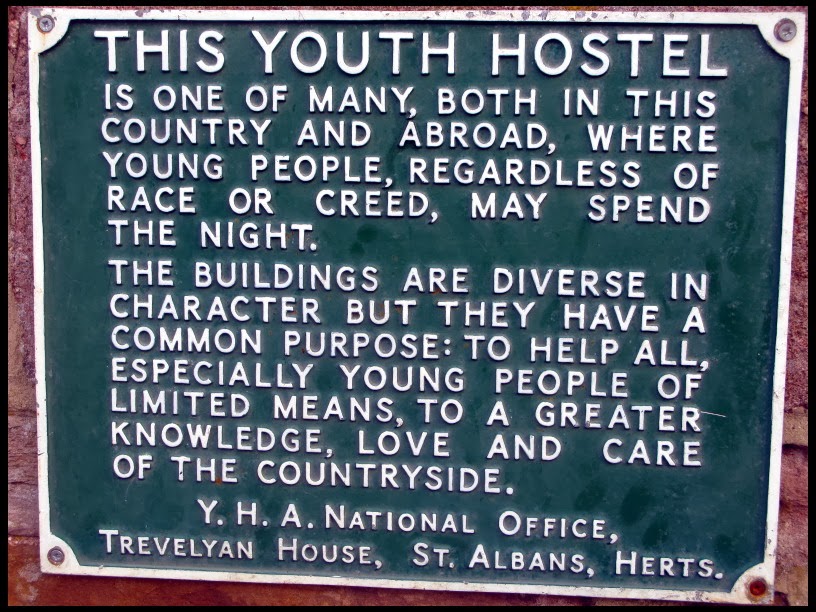
Youth Hostels


My family rejoined the Youth Hostel Association last summer. I have been a member for many years and visited dozens of hostels around the country. The Moorlands used to have several hostels although their numbers have been depleted and reduced even further with the selling off of Gradbach Hostel last year to Newcastle College.

The movement in the UK was born 80 years ago when cheap accommodation was opened in scenic parts of the country giving young people from industrial areas their first opportunity to explore the picturesque beauties of the UK. It gained royal approval early on when the Prince of Wales opened Derwent Hall in the Peak District in 1932.

Ilam Hostel opened in 1935 fulfilling a need as the Peak District attracted 20,000 youth hostellers to existing hostels in the area. During the war Ilam was pressed into service providing emergency accommodation for Czech refugees. Other hostels that opened in the 1930s were Ashover and Rudyard, both of which have long since closed. Rudyard had a distinguished literary visitor in the winter of 1936. George Orwell used it en route to Wigan to research “Road to Wigan Pier”; Orwell stayed a night at the Youth Hostel beside the Lake. It was intensely cold the hostel was unheated and lit only by candles. He had to thaw out over a fire in the morning. The lake was frozen and ice had formed into blocks which made a clanking sound as they collided. Cigarette packets bobbed up and down among the ice floes. Orwell thought it was a very depressing place.

YHA membership took off after the war with over 300 hostels opened by 1950 with individual membership reaching 200,000.

The first hostel I used was Hartington which coincidentally was the hostel where I rejoined in August. It was the summer of 1970 and I was part of a geography field trip from school. Of the local ones I have also stayed at Meerbrook in the late 80s which was rather cold and damp and Ilam which was delightful. I used to prefer the simpler hostels such as Ellingstring in Yorkshire Wheathill in Shropshire and Alpheton in Suffolk which was an old Nissen hut. It is a pity that these hostels were those targeted for closure in the 1990s as I found them basic but charming.


Anyone who has stayed any time in hostels during the old regime would be familiar with the “chores” that hostellers would be given and also the often eccentric hostel wardens who ruled with an iron fist and dole out the duties. I fell foul of such a character in the 80s at a basic hostel on Dartmoor who took a dim view of anyone who went to the pub. Dressed in lederhosen stretched over a portly frame the very camp warden admonished me in a phrase that has always lived with me “I tend to find that my young gentlemen like to go to bed early after a hard day on the hills”. I was on toilet cleaning duties the following day.